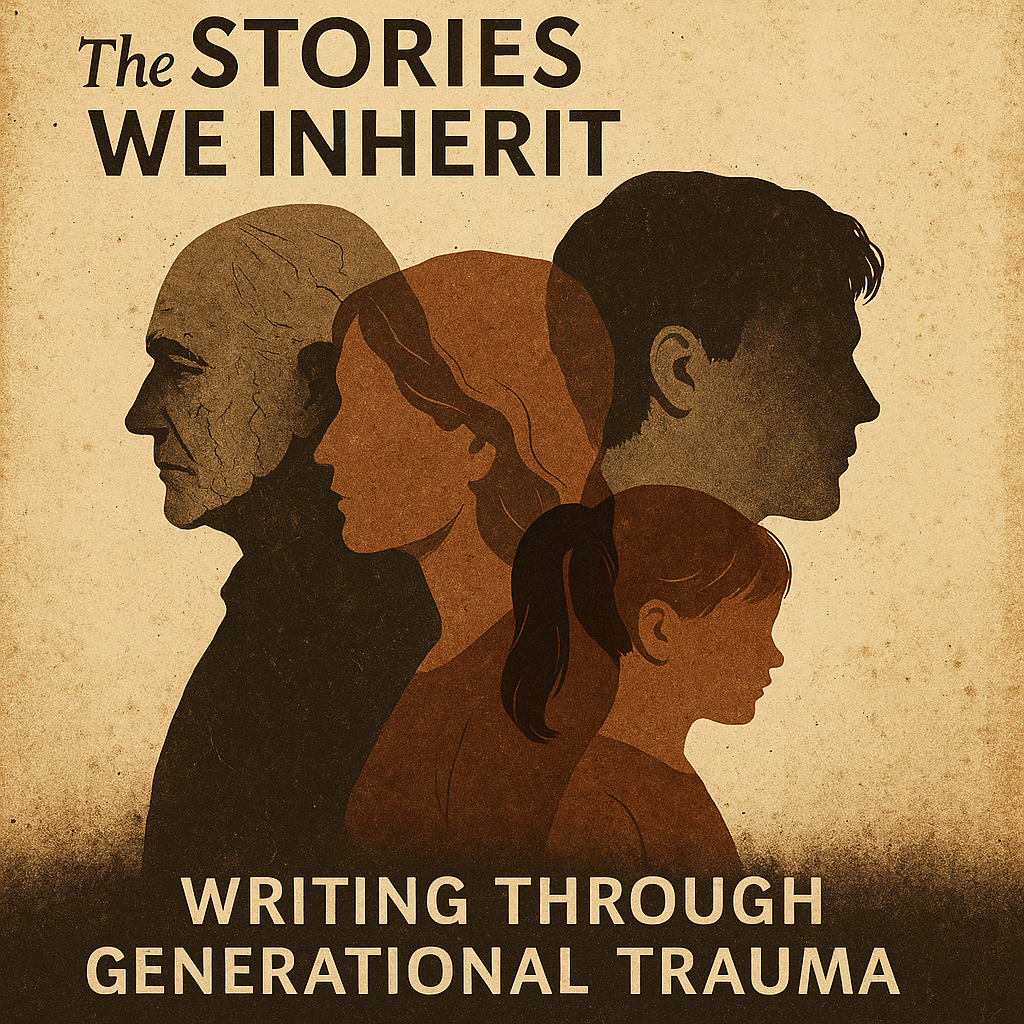
Discover how storytelling helps writers confront and process generational trauma, turning inherited pain into powerful narratives of resilience and hope.
Introduction
Stories are more than words on a page—they’re echoes of the lives we’ve lived, the pain we’ve carried, and the lessons we’ve learned. For many writers, storytelling becomes a way to process generational trauma, turning inherited scars into something meaningful.
But how do you write about the wounds that shaped you without letting them define you? Writing through generational trauma is not only a literary act—it’s an act of survival and transformation.

The Weight of Inheritance
Generational trauma isn’t just about what happened in the past—it’s about the ripple effects that follow. The choices, silences, and scars of those who came before us often find their way into our own lives. Sometimes we feel it in patterns of behavior; sometimes it surfaces in stories we tell ourselves without even realizing where they came from.
In Tobacco-Stained Prayers, the protagonist grapples with a legacy of addiction, mental illness, and family dysfunction. These inherited struggles feel like chains, binding one generation to the next. But through storytelling, the character begins to unlock the possibility of breaking the cycle—turning memory into meaning, silence into voice.
Turning Pain Into Art
Writing about trauma isn’t easy. It requires honesty, vulnerability, and the courage to face the darkest parts of your past. Yet it also offers a rare and powerful opportunity: the chance to reshape the narrative.
By fictionalizing real-life struggles, writers can create enough distance to process them safely while still honoring their emotional truth. This distance transforms the rawness of lived experience into something both personal and universal. For readers, these stories can provide catharsis; for writers, they can offer a kind of liberation.
In this way, writing becomes more than craft—it becomes a method of reclaiming power.
The Role of Setting in Trauma Narratives
In Tobacco-Stained Prayers, the Southern Gothic setting becomes a mirror of the characters’ inner lives. The decaying houses, humid nights, and whispers of small-town secrets amplify the sense of inherited pain.
Setting is more than backdrop; it’s atmosphere. A crumbling church, an abandoned farm, or even a childhood bedroom can hold as much emotional weight as a character’s dialogue. When writing about trauma, place often reflects the unspeakable—what characters can’t articulate, the world around them can embody.
For writers, this means that setting isn’t just where the story unfolds. It’s part of how the story feels.
Why These Stories Matter
Generational trauma is often passed down in silence. Families bury stories. Communities hide truths. But silence doesn’t heal—it only deepens the wound.
Writing about trauma breaks this cycle. It gives voice to what was once unspeakable, transforming private pain into collective understanding. These stories matter because they remind us that trauma doesn’t just isolate—it connects. They offer solidarity, empathy, and the reminder that survival is possible.
Readers who encounter such stories often feel less alone. Writers who create them reclaim agency. Both participate in the act of healing.

Tips for Writing Through Trauma
- Start Small: Begin with one memory, one image, or one moment. Let the story expand from there.
- Create Distance: Use fictional elements to protect yourself and others while staying true to the emotional core.
- Focus on Resilience: Show not just the wound but the strength it takes to endure and overcome.
- Use Symbolism: Objects, settings, and even character names can carry layered meanings.
- Be Honest: Don’t sanitize the story. The messy, complicated parts are often the most powerful.
Conclusion
Writing through generational trauma is more than storytelling—it’s a form of healing. Each story is a reclamation, a way of saying: This pain shaped me, but it doesn’t own me. By putting inherited struggles into words, we transform scars into stories and silence into song.
For readers, these narratives can be a lifeline, a reminder that even in the darkest moments, there’s light to be found. And for writers, they’re proof that stories don’t just inherit pain—they can inherit resilience too.
Call to Action
Have you ever used storytelling to process your own struggles? Share your thoughts in the comments below—or explore Tobacco-Stained Prayers for a raw, unflinching look at how stories can heal.
FAQs About Writing Through Generational Trauma
1. What is generational trauma in writing?
Generational trauma in writing refers to using personal or family histories of pain, abuse, or silence as inspiration for storytelling. It acknowledges how trauma passes down through generations and how writing can help process and heal it.
2. How can I protect myself when writing about painful experiences?
Fictionalization, symbolism, and focusing on emotional truth instead of literal fact can create distance and help you process safely.
3. Why is storytelling an effective way to heal from trauma?
Storytelling externalizes inner struggles, turning chaotic feelings into structured narratives. This act gives meaning to pain and fosters catharsis.
4. Should I share my trauma stories publicly?
It depends on your comfort level. Writing for yourself can be just as healing as publishing for others. Sharing is powerful, but it’s not required for healing.
5. How can setting enhance trauma narratives?
Settings can reflect internal struggles. A decaying home, oppressive weather, or a haunted landscape can mirror the emotional weight of trauma.
6. Can writing about trauma harm instead of heal?
If done too quickly or without support, revisiting trauma can feel overwhelming. Writing should be approached gently and, if needed, with therapeutic support.
External Resource
For more on the healing power of writing, see The Trauma and Mental Health Report from York University.